المساهمون

يتم التشغيل بواسطة Blogger.
RSS

Web Firm Alibaba Denies Stock About To Tank


Chinese internet giant Alibaba - which had the world's biggest public stock offering in history last year - has denied its share price is about to halve.
The company raised $25bn (£16bn) in its November share flotation, as demand drove shares to open at $92.70 on the New York Stock Exchange - almost 40% above its $68 initial public offering (IPO) price.
But after rocketing 75% in their first two months of trading, shares recently slipped below their IPO price.
Now weekly financial newspaper Barron's has warned its share price could be cut in half as a result of China's struggling economy, and increasing competition in e-commerce.
After Alibaba warned of lower-than-expected sales, the Barron's report said: "That may only worsen as China's economic growth drops to its lowest pace in six years."
The report prompted Alibaba to hit back, saying the article "contains factual inaccuracies and selective use of information, and the conclusions the reporter draws are misleading".
In a letter published on its website addressed to Barron's editor, Alibaba said: "Your 12 September article with the sensational headline 'Alibaba: Why It Could Fall 50% Further' lacks three key ingredients - integrity, professionalism and fair play.

"We take strong issue with the reporting about the state of our company, and we feel compelled to set the record straight.
"Jonathan Laing's story contains factual inaccuracies and selective use of information, and the conclusions he draws are misleading.
"The facts above provide a clear and compelling case for the lack of integrity, professionalism and fairness of Mr Laing's reporting. 
"We urge you to issue a correction and we stand ready to discuss this with you at any time."
Alibaba said Barron's wrongly compared the company to eBay, and said it should instead be compared instead with its Chinese peers because eBay does not operate in China.

  • Digg
  • Del.icio.us
  • StumbleUpon
  • Reddit
  • RSS

NS&I Cuts ISA Rate As Popularity Soars


National Savings & Investments (NS&I) is slashing the interest rate on its Direct ISA because of its soaring popularity among savers.
The savings organisation said it was taking the decision to "balance the interests of its savers, taxpayers and the stability of the broader financial services sector."
NS&I is unique in the UK marketplace in that it is backed by the Treasury, meaning its products are 100% protected but laws govern their management to help ensure market fairness.
It said the interest rate on the tax-free cash ISA would fall to 1.25% from 1.5% on 16 November.
NS&I said the move would affect 404,210 customers with savings of more than £3.8bn in total and it was writing to them to explain the rate reduction.
Chief executive Jane Platt said: "Interest rates in the easy access ISA market have been in decline over the year and our Direct ISA rate has stood out at the top of the best buy tables for some time.
"To ensure that we continue to strike a balance between the needs of our savers, taxpayers and the stability of the broader financial services sector, we have taken the difficult decision to reduce the rate on our Direct ISA.
"However customers continue to benefit from a competitive rate and 100% security on all their deposits."
NS&I said its decision would move the product back to the middle ground for rates available in the ISA market currently.

  • Digg
  • Del.icio.us
  • StumbleUpon
  • Reddit
  • RSS

Inflation Falls Back To 0% In August


The Consumer Prices Index (CPI) was unchanged in the year to August 2015, that is, a 12-month rate of 0%, down from 0.1% in the year to July 2015.
Smaller increases to clothing prices on the month compared with a year ago was the main driver behind the slowdown to price level growth.
Lower prices at the pumps together with cheaper ferry fares also helped to suppress price growth.
Bucking the lower price trend were soft drinks and furniture prices which helped prevent the UK from entering negative inflation again.
The UK entered negative inflation in April for the first time in 55 years.

  • Digg
  • Del.icio.us
  • StumbleUpon
  • Reddit
  • RSS

Get-Rich-Quick Case Cost Taxpayers £1.4m


The prosecution of a group of women who ran a £21m pyramid scheme cost taxpayers at least £1.4m, according to a Freedom of Information request.
The scheme, which generated £21m before it was shut down, conned at least 10,000 people between May 2008 and April 2009.
But the perpetrators paid back as little as £1 each, according to an investigation by the Press Association.
The victims were encouraged to "beg, borrow or steal" to take part in the scam, which promised £23,000 for each £3,000 investment if a player recruited two people.
Bristol Crown Court heard the scheme's committee members pocketed up to £92,000 each, while up to 88% of their members lost between £3,000 and £15,000.
The eleven women prosecuted for the scheme were the first in the UK to face prosecution for a pyramid scheme under the Consumer Protection from Unfair Trading Act.
Six women who were convicted of operating and promoting the scheme paid back a total of £535,454 in confiscation orders and prosecution costs.
The prosecution cost taxpayers "not less" than £1,465,000 - not including defence costs, legal aid costs or court costs.
A spokeswoman for the Competition and Markets Authority (CMA) said there was a "strong public interest" in bringing the case to act as a deterrent, warn the public and achieve justice for victims.
"Investigating and prosecuting complex economic cases of this kind are invariably costly, often taking a significant time to investigate fully and resulting in lengthy trials," she said.

"In particular, they will typically involve sifting through millions of physical and electronic documents, complicated money tracing exercises and interviewing of a large number of potential witnesses.
"All this calls for a team of staff working full-time, including expert staff, and the advice of specialist counsel.
"The costs associated with this particular case are in no way unusual or unexpected for a case of this kind."
Judge Mark Horton ordered the defendants to pay back individual amounts following a Proceeds of Crime hearing held in July.
Chairwoman Laura Fox, 70, was ordered to pay £156,000. Treasurer Jennifer Smith-Hayes, 69, paid £111,912, while secretary Susan Crane, 69, paid £81,162.
Hazel Cameron, 55, paid £65,012, charts co-ordinator Mary Nash, 65, paid £53,362 and Carol Chalmers, 69, paid £47,862.
In 2012, Sally Philips, 35, of Hengrove, Jane Smith, 51, of Bishopsworth, and Rita Lomas, 50, of Whitchurch, received suspended sentences after they admitted promoting the scheme.
Two other women accused of being involved with the scam were cleared of all charges.

  • Digg
  • Del.icio.us
  • StumbleUpon
  • Reddit
  • RSS

Meet the Window Washers That Transform Into Superheroes for Sick Kids


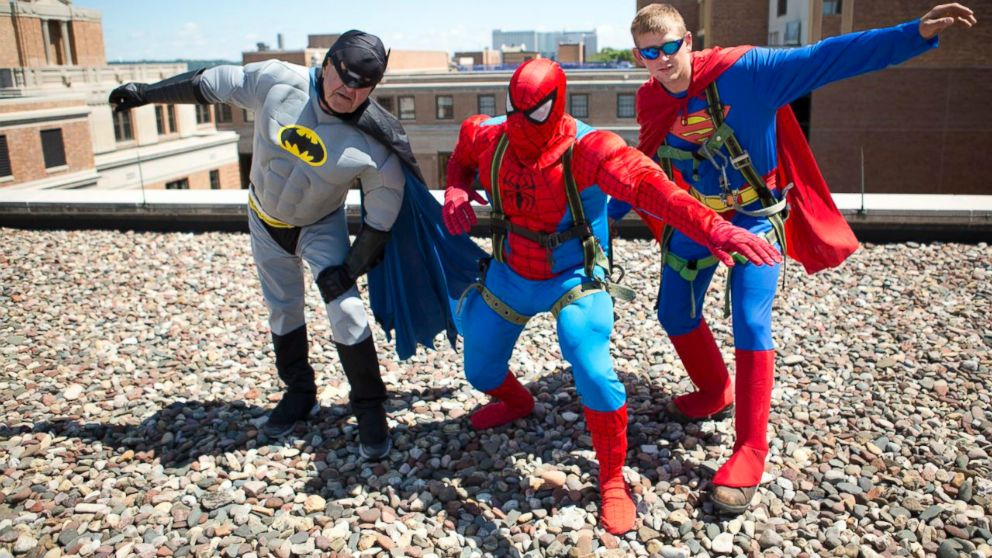
Roger Corcoran has been a window washer for 35 years. But on Wednesday, he was Batman.
The 61-year-old grandfather of two rappelled down the side of Mayo Clinic Children’s Center alongside Spiderman and Superman.
“When a kid wanted to know why I was so old, I told him I played the original batman,” Corcoran said with a chuckle.
Rappelling Elves Delight Patients in Indiana Hospital
John Carroll, 48, dressed up as Spiderman.
“It’s one thing I look forward to doing all year,” said Carroll, who has worked as a window washer for 15 years.

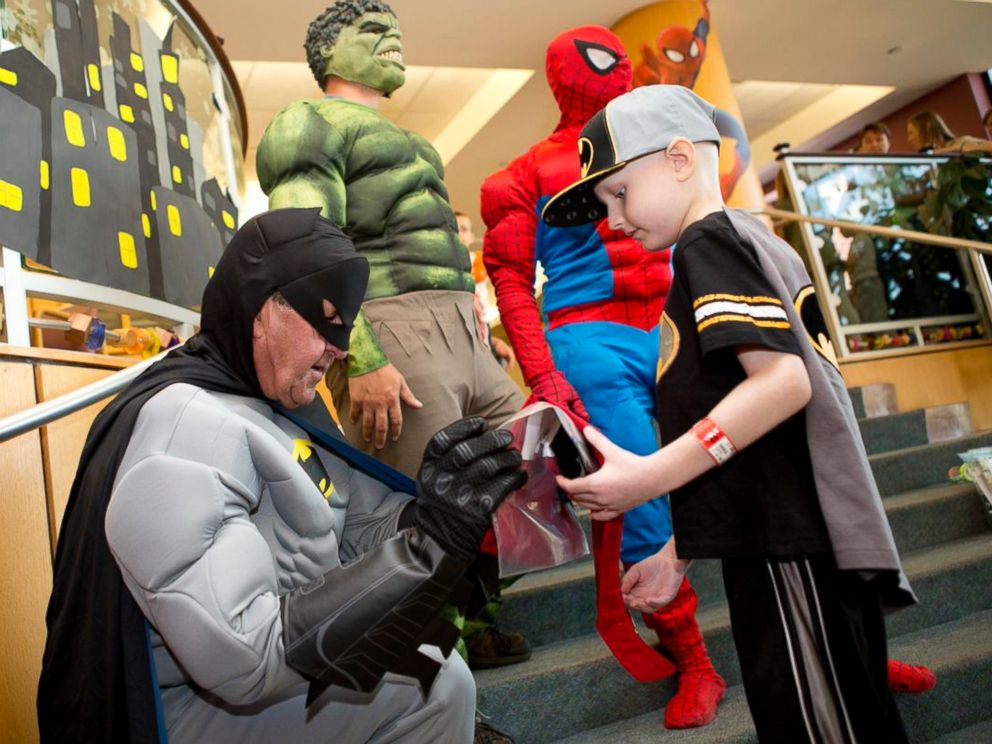
After rappelling down the side of the building, Carroll and Corcoran went inside to meet the kids, who were appropriately shocked to come face-to-face with their high-flying heroes.
“The first time it happened, I was kinda crying because it means a lot to those kids,” Carroll said.
Carroll and Corcoran work at ISS Facility Services, which washes windows for Mayo Clinic. Charlie Kleber worked with Mayo Clinic to set up the special event, and said he picked some of his best guys to swing down and make the kids smile.
He said he’s watched even the sickest kids come alive when they’re face-to-face with the superheroes.
He called Wednesday’s superhero experience “life-changing,” and said they were all struck by a special patient: 13-year-old Claire Strawman, who in April became the youngest heart-lung patient Mayo Clinic had ever transplanted.
She told them about how she went into lung failure and underwent a transplant in April. She was hospitalized for about seven months before being released a few weeks ago. But she got sick on Monday and needed to come back.
“I got goose bumps right now telling you that story,” Kleber said.

Claire is on immunosuppressant drugs to prevent her from rejecting the new organs, but the drugs also make her more prone to infections. When she got sick, her parents worried and brought her back to the hospital, according to her mom, Ellen Strawman. She was in the pediatric ICU when the superheroes visited.
“Just seeing them put a big smile on her face,” Strawman said, adding that Claire left the hospital today for her home in Bloomington, Minnesota.
“She told us what happened to her and everything. We were all standing around her tearing up,” Carroll said. “That story made you feel so proud to do it for the kids because it means so much to them. It was great.”

  • Digg
  • Del.icio.us
  • StumbleUpon
  • Reddit
  • RSS

Twinless Twins Grieve Together


It’s been 10 years since Alyssa Dreiver’s twin sister died, but people still mistake her for Anissa.
They were identical, with blonde hair, brown eyes and matching smiles. When they spoke the same word at the same time, their throats would vibrate, Dreiver said.
But then a driver hit Anissa’s car head-on, killing her instantly when she was 25 years old.
Losing Their ‘Other Half’
“On February 1st 2004, my world was shattered,” Dreiver, now 35, told ABC News. “When I looked at her in the casket, I felt as if I was looking at myself.”
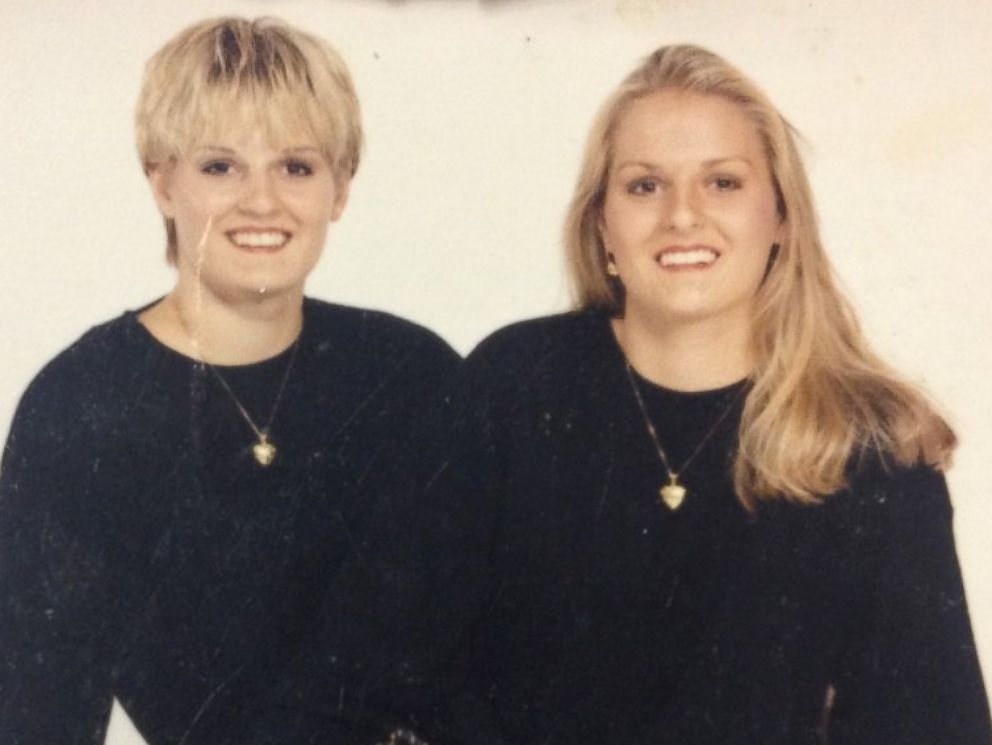
The two were inseparable growing up in Oklahoma, Dreiver said. They wore matching outfits, but in different colors. When Dreiver cut her hair during her senior year of high school, Anissa cried because they no longer looked exactly alike. Even after they moved to separate cities and got married, they would still drive six hours to see one another every few months and sleep in the same bed.
PHOTO: When Alyssa cut her hair in high school, Anissa cried because they no longer looked exactly the same.
Courtesy Alyssa Driever
PHOTO: When Alyssa cut her hair in high school, Anissa cried because they no longer looked exactly the same.
Though Dreiver had experienced other close family members’ deaths, Anissa’s death was different, she said.
“Anissa is half of me. She is half of my soul. She’s a part of me. She’s my best friend. She’s like my shadow,” Dreiver said. “And I no longer have that.”
Dreiver said she has had a hard time coping. Every time she looks in the mirror, she remembers what she lost, she said.
Finding Twinless Twins
Last week, Dreiver found a Facebook support group for “twinless” twins – people who have lost their twin.
“I already feel a wonderful connection with them that I haven’t felt with any counselor or friend or anything like that,” she said. “No counselor I have ever been to can help me because they don’t understand.”
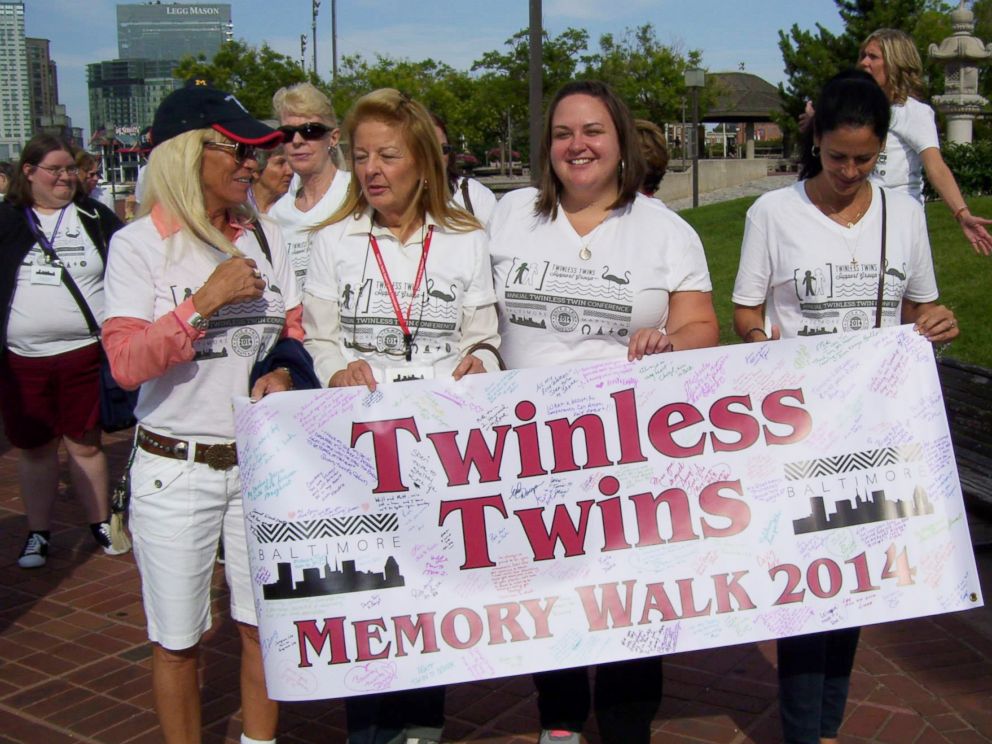
The national Twinless Twins Support Group has been around for decades, but the Facebook group has helped connect even more people over the last few years, especially those between 25 and 35 years old, said the group’s administrator, Dawn Barnett. Although there were 250 Twinless Twin Facebook group members in 2012, there are now nearly 1,500.
“We believe that by helping other twinless twins who are grieving, it helps you,” Barnett said, echoing Alyssa’s point about how other people don’t quite understand. “Twin loss is so deep because you were bonded from the womb on.”
Domenick Abbate, 40, who said he always felt like the big brother figure to his twin Frank, said the two of them were so close that they swore they could share dreams as children.
PHOTO: Domenick Abbate became depressed after his twins death, but he recently discovered Twinless Twins, a support group that understands what hes going through.
Courtesy Domenick Abbate
PHOTO: Domenick Abbate became depressed after his twin's death, but he recently discovered Twinless Twins, a support group that understands what he's going through.
Frank, a canine handler for the New Brunswick Fire Department following the September 11 attacks, died of lymphoma in 2010, Abbate said. He tried to keep moving forward, but eventually he started drinking, missing work and experiencing marital problems.
“The minute I got home, I wanted to crawl into a ball,” he said. “You still feel that missing connection. It was basically eating me up inside."
His wife was the one who found the twinless twins group and suggested he go to their annual conference in mid-July. He felt an almost immediate connection, he said. He loved how the group members would know when he needed a hug even before he did.
“We almost all had the same story in the end -- how we were feeling” he said. “No one else understood. My sister, my mother, they all say ‘I understand how you feel,’ but they didn’t.”
No Longer Living as ‘We’
Carolyn Landis, a psychologist at UH Rainbow Babies and Children’s Hospital in Cleveland, Ohio, said how someone handles the death of a twin can vary depending on a variety of factors, including how close the twins were and even how much they looked alike.
“Especially with identical twins, you would remind yourself of your twin,” Landis said. “It’s a similar phenomenon to a parent that loses a spouse and sees aspects of their spouse in their child.”
Landis said the surviving twin should focus on how he or she is unique as part of the healing process. Writing down memories in a journal can help, too.
But regardless of whether twins are identical, Landis notes that they went through every milestone -- from starting kindergarten to leaving for college to turning 30 -- together. Experiencing new milestones alone may be especially hard for the surviving twin, she said.
“Now you’re a single person, and you’ve been living as a ‘we,’” Barnett said. “You live a different normal.”
Landis said that technology from Skype to unlimited long distance calling can keep twins connected in a way that growing up might have pushed them apart in decades past. As a result, the death is painful even if twins didn’t live in the same city.
Landis said some surviving twins may fall into depression and should not be afraid to seek help from a therapist. Some survivors seek religion, too.
Early Twin Loss
But not all surviving twins remember the twin they lost. Dawn Barnett, who runs the Facebook group, said her identical twin died when the two were 10 months old in 1948. “All my life, I felt I wasn’t a twin because I didn’t get to live with her,” Barnett said. “My parents were in such grief. My parents never talked about her.”
But she came to embrace being a twin after seeing the Twinless Twins Support Group on a talk show in the mid-1980s and deciding to get involved.
Barnett felt especially close to her twin after having a heart attack in 2005. Her twin’s cause of death had been a heart problem in infancy nearly six decades earlier. Barnett spent several days in a coma and said her twin came to her and told her it wasn’t time to die yet.
PHOTO: Twinless Twins support group brings people whose twin has died together.
Courtesy Dawn Barnett
PHOTO: Twinless Twins support group brings people whose twin has died together.
At the annual Twinless Twins conference this year, about 120 attendees – 10 percent of the total group – lost twins in utero or as babies, Barnett said, noting that the organization doesn’t keep statistics.
Kevin Mullen, 33, of Vermont, is among them. Mullen’s twin died when his umbilical cord wrapped around his neck and a blood clot formed, he said. Mullen himself was born with cerebral palsy. The only photo Mullen has of the two of them is an ultrasound photo.
“I’ve always been around twins. I have twin cousins, several sets of twin cousins,” he said. “Even though I do miss my twin, I honor him in different ways.”
Mullen happened upon Twinless Twins in the 1990s and said he honors his twin by participating in memorial walks and fundraisers for the group.
He said milestones, like turning 16 and going to Europe, always made him think of his twin because it would have been something they could share together.
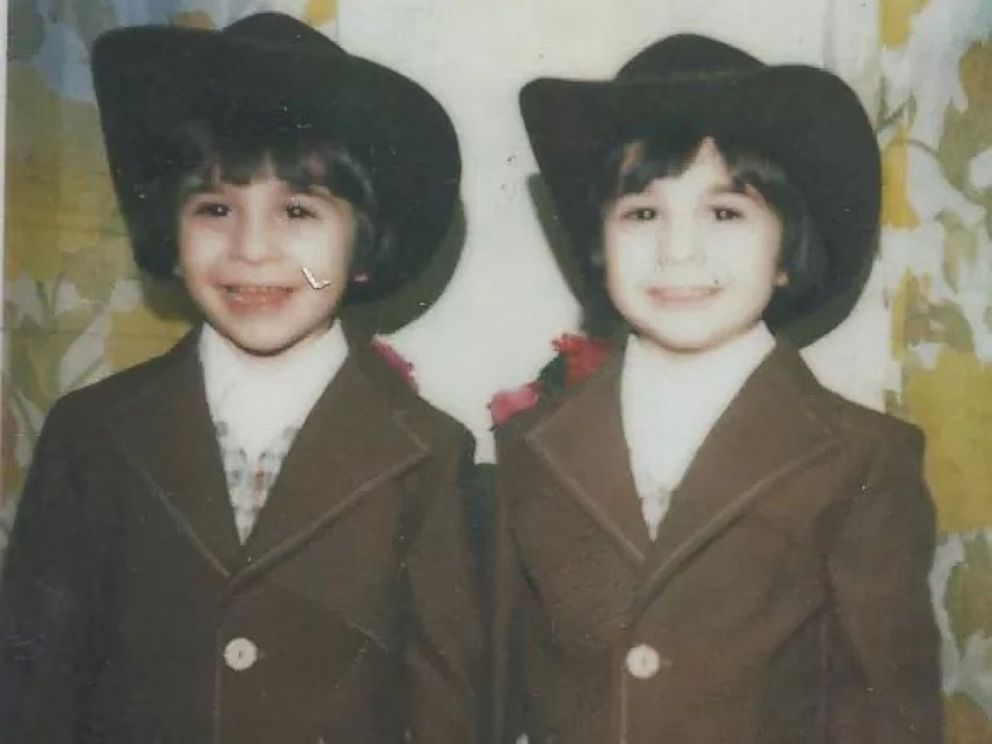
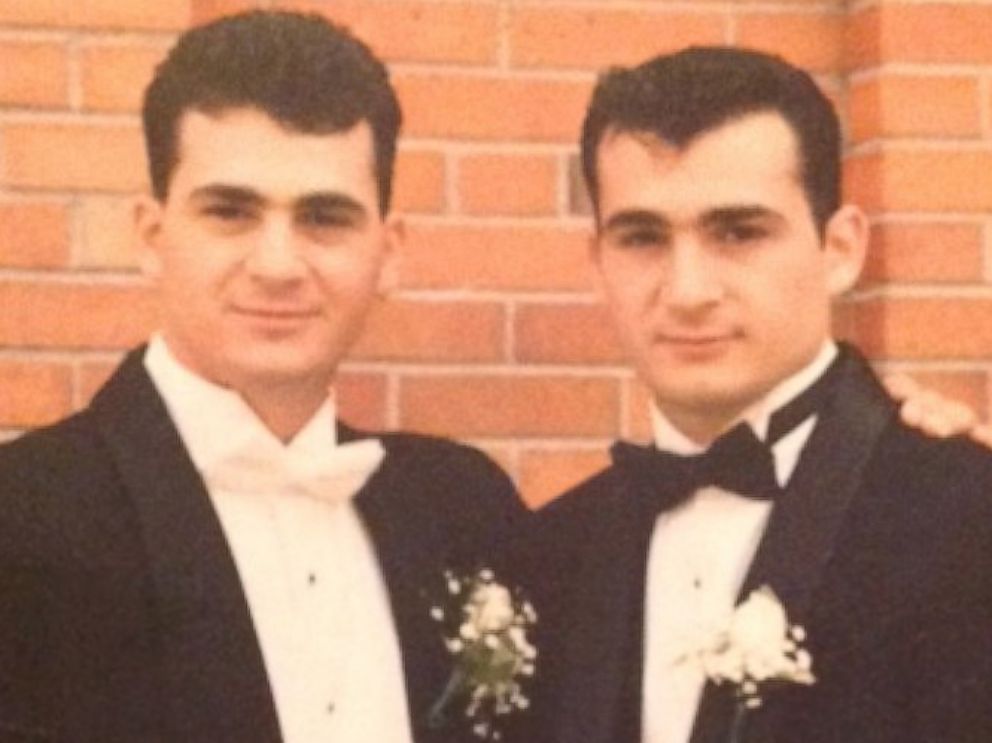
PHOTO: Twins Domenick and Frank Abbate grew up so close that they said they could share dreams. When Frank died, it was especially hard on Domenick.
<p itemprop=" />
Courtesy Domenick Abbate
PHOTO: Twins Domenick and Frank Abbate grew up so close that they said they could share dreams. When Frank died, it was especially hard on Domenick.
Kendra Felder, 24, said she feels the same way. She found out about her twin sister when she was about 8 years old. Her twin, Courtney, died 11 days after they were born premature. On their birthday, she said she likes to find Courtney’s baby blanket and put it in a shadow box. She always thinks of her twin when a friend or family member dies and when she finds herself in a period of transition.
Landis said she’s had patients who don’t remember their twins but still think about them and talk to them.
“The fact that you were together in the womb, there’s something about that connection,” Landis said.
It’s important for parents to be transparent about the deceased twin by talking about it openly and making sure the surviving child doesn’t feel guilty, Landis added. The missing twin should never be a secret, and may even become a source of comfort.
Remembering Anissa
Driever talks about her twin sister, Anissa, every day even though she’s been dead for 10 years, she said. When she switched jobs, her coworkers said they felt like they were losing two people instead of just one because Driever talked about Anissa so much that she became alive for them.
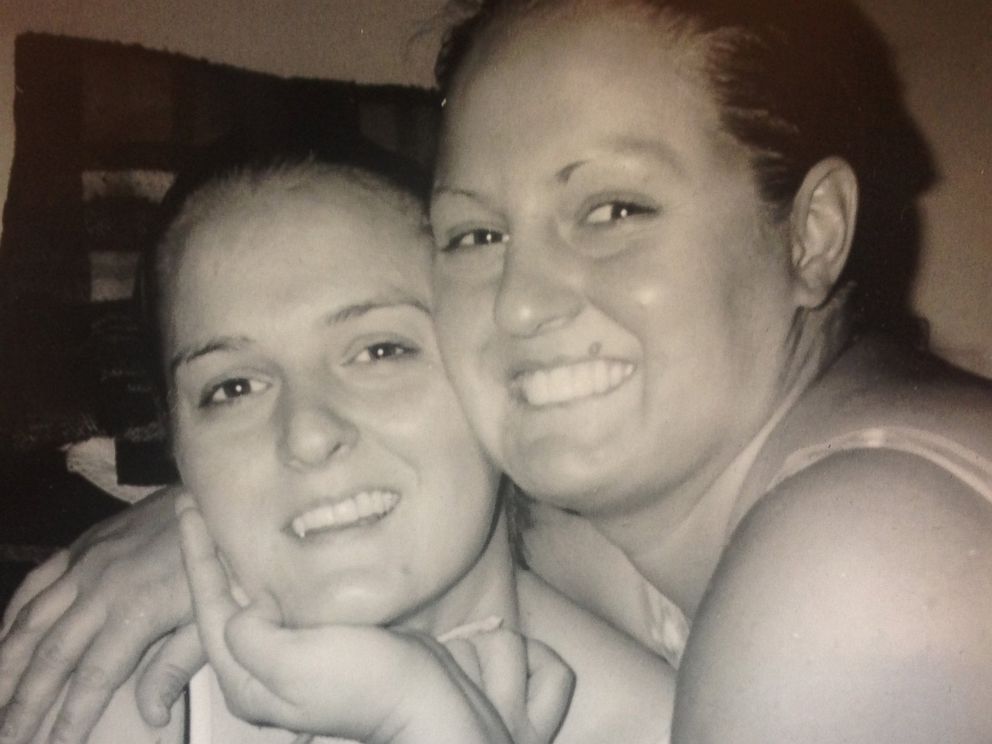
“I love whenever somebody mistakes me for Anissa,” she said. “It warms my heart because I don’t want my sister to be forgotten. I talk about her or I think about her every day.”
PHOTO: Alyssa Drievers twin sister Anissa died nearly a decade ago, but the loss still hurts, she said.
Courtesy Alyssa Driever
PHOTO: Alyssa Driever's twin sister Anissa died nearly a decade ago, but the loss still hurts, she said.

  • Digg
  • Del.icio.us
  • StumbleUpon
  • Reddit
  • RSS

How Scientists and Doctors Use Baby-Friendly Tricks to Study Infants


For all the impressive advancements in medical technology, researchers and scientists still face a daunting challenge when they study the habits of the adorable but uncommunicative subjects called human infants.
In order to study infants without overwhelming them, scientists often try to mask the massive machines needed to view brain activity either by having the child sleep through it or by covering it in kid-friendly decorations. Other researchers have devised decidedly low-tech ways of reading an infant’s interest in a subject, even when they can’t say a single word.
In a study released Monday in the Proceedings of National Academy of Sciences, doctors used a special machine to examine infant brain activity as they start to learn language skills.
Patricia Kuhl, a professor of speech and hearing sciences at University of Washington and the lead author of the study, said the research indicated the area of the infants’ brain that controlled motor skills lit up when they heard certain words. The activity indicated that the infants are trying to mimic adults and speak much earlier before they say their first word.
However, Kuhl said, the study was important because of both the surprising findings and the way researchers were able to get them. To “read” the infant’s brain activity, they used the cutting-edge device called a magnetoencephalograph, that was quiet and nimble enough to read the chaotic world of infants’ brain activity.
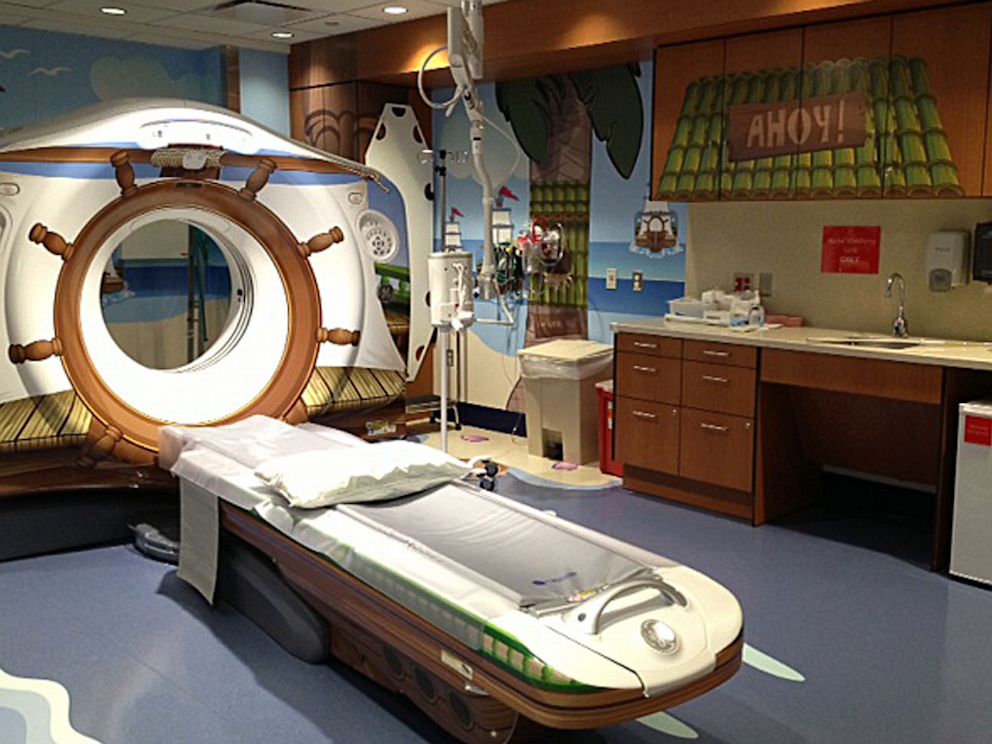
PHOTO: The pirate-thesed CT scanner
NY-Presbyterian Morgan Stanley Childrens Hospital
PHOTO: The pirate-thesed CT scanner
Kuhl said unlike an MRI machine, which is extremely loud and requires a patient to be totally still, the magnetoencephalograph is nearly silent. However the infants still had to be strapped into a chair, so to keep them entertained the researchers were tasked with making silly faces and holding up toys all in the name of science.
“You want them to like the lab,” said Kuhl. “It’s decorated with fish and it’s got little stickies [on it.] It’s ... very baby friendly. We wave toys and we’re very aware and of their curiosity and of their desire to play. We do everything to make them comfortable.”
In a 2013 study published in Psychological Science, researchers used MRI machines to examine baby’s brain activity in response to different stimuli. However, to get the infants into a machine where they could not move, the researchers had the babies go in after they fell asleep naturally. They also used ear coverings so the loud MRI machine didn’t wake the infants.
MRI machines can be so distressing for patients because of claustrophobia or other fears about being in the hospital that a New York Hospital installed a pirate-themed scanner to put children (and some parents) more at ease.
“The genius is in this machine. ... There’s no noise and the baby can listen and can move,” said Kuhl of the magnetoencephalograph. “The ability for the first time to do this kind of recording in this kind of technical advanced machine ... [it’s like] we’re putting [on] a stethoscope.”
Aside from technological advancements, researchers rely on some decidedly low-tech approaches when studying infants.
Fei Xue, a professor of psychology at the University of California Berkeley, has done numerous studies examining how infants learn and react to new toys or information. She said researchers have plenty of tricks to keep babies focused on the tasks at hand.

  • Digg
  • Del.icio.us
  • StumbleUpon
  • Reddit
  • RSS